
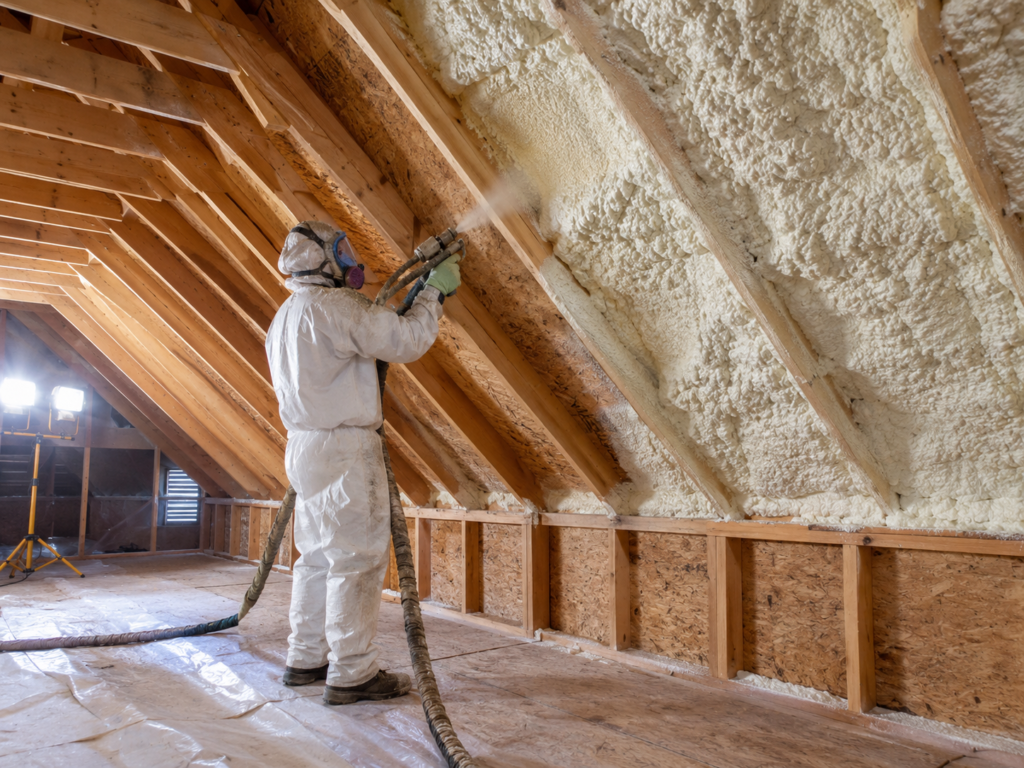
Most spray foam insulation jobs in Odessa cost between $2,000 and $6,000. Standard installations often land around $2,300 to $2,600. Small jobs usually hit a minimum charge of $1,000 to $2,000, because the crew, rig and chemicals cost the same whether they spray 300 square feet or 1,000.
That’s the short answer. Here is how the number is worked out, and what makes your quote higher or lower.
How Spray Foam Is Priced: The Board Foot
In Texas, spray foam is priced by the board foot. One board foot is one square foot of surface at 1 inch thick. That’s why two quotes for the same attic can look very different: the thickness changes the price.
| Foam type | Installed price per board foot |
|---|---|
| Open-cell spray foam | $0.44 to $1.00 |
| Closed-cell spray foam | $1.00 to $2.50 |
The formula: area (sq ft) × thickness (inches) × price per board foot = your cost.
This is only a rough guide. Attic shape, access and prep work can change the final number, so a free estimate is always the most accurate.
Real Cost Examples
| Job | Board feet | Estimated cost |
|---|---|---|
| 1,000 sq ft attic area, open-cell, 3.5″ | 3,500 | $1,540 to $3,500 |
| 1,000 sq ft attic area, closed-cell, 2″ | 2,000 | $2,000 to $5,000 |
| 2,000 sq ft roof deck, closed-cell, 2″ | 4,000 | $4,000 to $10,000 |
These are estimates to show how the math works, not a quote. If the math comes out below the contractor’s minimum, the minimum charge applies instead.
The Minimum Job Charge
Most local contractors set a minimum of $1,000 to $2,000. It covers chemical setup, travel and equipment, and it applies no matter how small the job is.
So if you only want one wall, a garage ceiling or a small crawl space done, expect to pay more per square foot than someone insulating a full attic. If you have a few small areas, it usually makes sense to do them all in one visit.
What Changes Your Price
1. Foam type. Closed-cell costs more per board foot because it packs more insulation (and strength) into every inch. Open-cell costs less and works well in most attics at the right thickness.
2. Thickness. This is the biggest swing. A 3.5″ layer and a 6″ layer are very different jobs. In West Texas, where summer attics can pass 140°F, thickness on the roof deck matters.
3. Size and shape of the space. A simple, open attic goes fast. A cut-up attic with low rafters, tight corners and lots of obstructions takes more labor.
4. What’s already in the attic. Old, wet or contaminated insulation has to come out before foam goes in. Attic insulation removal is usually a separate line item, so ask about it upfront instead of finding it on the final invoice.
5. Ventilation and prep work. Some attics need vents sealed, baffles installed or small repairs done first. A good installer explains this before the job, not during it.
6. Home age and condition. Many Odessa and Midland homes were built during the oil-boom years and have gaps, odd framing and thin original insulation. They can take more prep, but they also see the biggest comfort difference afterward.
Is Spray Foam Worth the Higher Cost?
Fiberglass batts and blown-in insulation are cheaper upfront. The trade-off is air leakage: they slow heat down, but they don’t stop air from moving through gaps. Spray foam does both, which is why many homeowners notice steadier room temperatures and lower cooling bills.
But it isn’t right for everyone. If your attic is already well insulated and sealed, spending more may not give you much return. And if your budget is tight, a well-done blown-in job beats a rushed spray foam one. A good contractor will tell you that honestly.
Find the Problem Before You Pay for the Fix
Before spending thousands on new insulation, find out where your home is really losing energy. A thermal imaging scan shows exactly where the gaps and weak spots are, so you only pay to fix what needs fixing. That alone can stop you from over-insulating the wrong areas.
Rebates and Incentives
The federal 25C energy-efficiency tax credit ended after 2025, so it doesn’t apply to 2026 projects. Some utility and local programs may still offer help, and these change often. Our rebate assistance program page explains what to check, and we’re happy to walk you through your options before you commit.
How to Compare Quotes (So You Don’t Overpay)
Ask every contractor the same five questions:
- Open-cell or closed-cell, and what thickness exactly?
- What is the price per board foot, and how many board feet are in the quote?
- Is old insulation removal included, or extra?
- Is ventilation and prep work included?
- What warranty do you give on the work?
If a quote doesn’t answer all five, it isn’t a real quote yet. A price far below the others usually means thinner foam or skipped prep. Our attic insulation installation page shows what a complete job includes, so you know what to compare against.
Serving Odessa, Midland and the Permian Basin
We install spray foam across Odessa, Midland and nearby Permian Basin towns. Whether it’s a house, a shop or a metal building, the process is the same: inspect, measure, quote in writing, install.
Get Your Exact Price
Every attic is different, so the only number that matters is the one for your home. Call us today or request a free estimate. We’ll come out, measure, and give you a written quote with the foam type, thickness, board feet and total price listed clearly. No pressure.
Frequently Asked Questions
How much does it cost to spray foam a house in Odessa?
Whole-home projects typically run $2,000 to $6,000, with many standard installs around $2,300 to $2,600. Larger roof decks or thick closed-cell applications can go higher, so ask for a written quote with the thickness and board feet listed.
Why is there a minimum charge?
Chemical setup, travel and equipment cost the same on small jobs as on big ones. Most contractors set a minimum of $1,000 to $2,000 to cover that.
Is closed-cell spray foam worth the extra money?
For roof decks in extreme heat, metal buildings or moisture-prone spaces, often yes. For a standard attic, open-cell at the right thickness can be plenty.
Do I need to remove old insulation first?
Usually only if it’s damaged, wet, contaminated or heavily compressed. Clean, dry insulation can sometimes stay, depending on the foam type and area. We check this during the free inspection.
How long does installation take?
Most average homes take one day, sometimes two for larger or more complex jobs.
Leave a Reply